
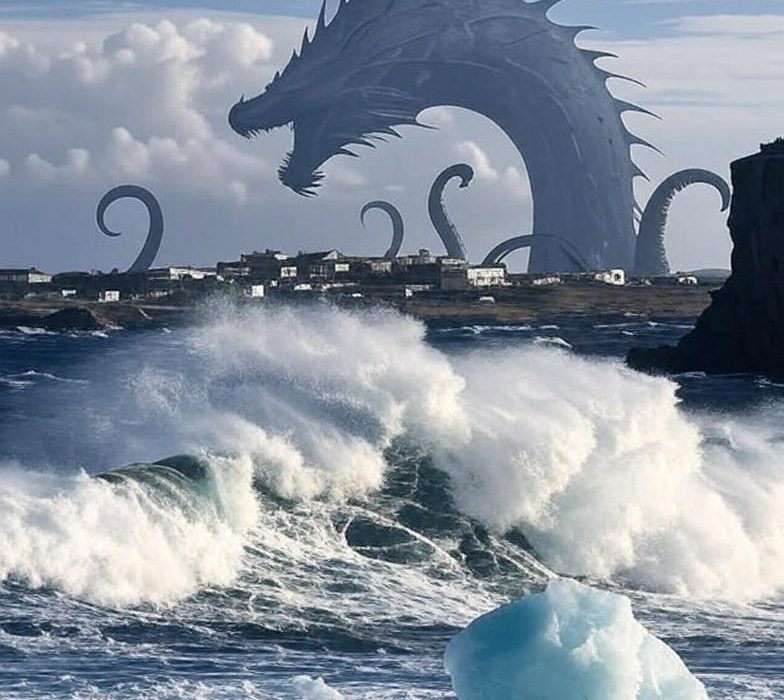
There is one way to easily discern the local inhabitants from foreigners on the southern island of Mo Ari. They have too much of a joyful and energetic way they pronounce Mo Ari.
Most people adjust after the first cold and freezing storm, the next adjustment is having fish and oats almost every day. If you still keep hope and promise in your heart after that, the first time you just catch a glimpse of Al-lulakra, will bring you back to the reality of your situation.
Al-lulakra and his followers
Most of the locals and wise travelers are worshippers of the ancient sea creature. For safe travels on these cold and unforgiven waters, tributes or sacrifices are brought monthly. Or a trading company that wants to ensure that the under water servants of Al-lulakra leaves their cargo in peace, they would send their offerings ahead of time, to the priest of Al-lulakra.
Tide Caller, Storm Bringer, God of the South Seas.
A few of this titles that can be spoken with the common tongue. He has found a strange attachment to Mo Ari. For such a small island, there is a large amount of goods and wreckage from sunken ships that ends up on her shores.
Those who serve Al-lulakra, believe it is his way of looking after his servants. An elven philosopher, Aeyleth the 3rd of the H’irth, believes it is how they are kept in a trapt. A false sense of trust in someone who is actually their captor.
More about Mo Ari
Those who have chose to made this place their home, are always fishing, hunting seals and other sea creatures. Some sell themselves as guides to those who want to travel more easily though these waters or travel even more south in search of ancient runes.
There is a handful of farmers, who use the little patches of usable soul to grow fresh fruit and vegetables. There is not a lot of livestock or poultry. The more affluent families have invested in them. In the last eleven years a druid has settled on this island and started to tend to an almost depleted forest and is bringing it slow back to life. To gain access to the trees for wood, villagers must help in planting and rejuvenating this grove.
There is a dock and small drydock. A retired shipwright and his protege. Also a carpenter who has become a savant at repurposing driftwood and wreckage to repair ships and also build furniture. There is a rather angry blacksmith, who curse rust every morning and then starts his day.
Making money through despair
The people chose to stay at this island, because of either ending up on her shores after their ships have sank, or when they try to escape the rules and restrictions of the mainland. There is even a local captain, who uses his sloop to save people and only let his brig on the waters if there is a worthy trade or the families of the rescued sailors, pays enough for them to be brought back home.
Magic on the island
We have spoken of the druid and his grove. There is a temple to Al-lulakra, with two priest who does services and sacrifices. A cleric who is the main healer and spiritual protector. They also have made a bond with some merfolk from the deep, to ally in serving Al-lulakra. There the people of the island made friends with a paladin, who acts as a herald to Storm Bringer.
- Name: Mo Ari
- Area: Southern Ice Sea
- Population size (avg):
- Population Type: Array
- Magic arts not practised: Array
- Summary:
Mo Ari is a small, hardy island village in the ice-cold Southern Ice Sea, home to shipwreck survivors, exiles, and devoted worshippers of Al-lulakra (Tide Caller, Storm Bringer, God of the South Seas). The population is modest—likely a few hundred at most—sustained by fishing, seal hunting, scavenging wreckage, limited farming, and trade in salvaged goods. Life revolves around the sea, the temple, and communal survival in a harsh, frozen environment.
- Unique laws:
Mo Ari operates under a blend of temple theocracy, communal survival codes, and maritime pragmatism. The Temple of Al-lulakra (priests, cleric, and paladin-herald) holds final authority, with the informal council (elders, harbor master, druid, and affluent heads) advising on day-to-day matters. Laws emphasize piety to the Storm Bringer, respect for the sea’s gifts and wrath, resource conservation in a frozen wasteland, and mutual aid among survivors and exiles.
Core Principles (The Word of the Tide)
Al-lulakra’s Due
Every inhabitant and visitor must contribute to monthly tributes/sacrifices (food, valuables, or symbolic offerings). Sea captains and traders pay in advance for safe passage or merfolk protection. Failure to contribute risks being “offered to the depths” (exile by boat during a storm or ritual sacrifice in extreme cases).
The Sea’s Gifts Are Shared
All wreckage, salvage, and bounty from the sea (fish hauls over a certain size, rare finds) must be reported to the Temple within one tide cycle. Goods are divided: 1/3 to the finder, 1/3 to the Temple (for upkeep and tributes), 1/3 to communal stores for the needy/winter. Hoarding or secret salvaging is theft from Al-lulakra and punished by public flogging plus restitution.
Grove and Growth
Wood from the druid’s grove may only be taken after equivalent labor in planting, tending, or protecting it. Unauthorized cutting is a grave offense-punishable by forced labor in the grove for seasons equal to the damage caused, or exile.
No Waste in the Cold
Food, fuel (blubber/oil), and materials cannot be wantonly discarded. All usable parts of seals, fish, and wrecks must be processed. Willful waste during winter months carries heavy fines or labor sentences.Social & Survival Laws
Aid to the Shipwrecked
Any survivor washed ashore must be brought to the Temple for assessment. They receive basic shelter and food for 30 days. After that, they must contribute labor or swear service to Al-lulakra to stay. Turning away the desperate (without Temple approval) is forbidden.
Harbor and Vessels
Only the harbor master (or designated captain) may authorize launches in dangerous conditions. Unauthorized sailing that endangers others results in vessel confiscation and banishment. All boats must carry a small tribute offering when leaving port.
Merfolk Alliance
Harm to allied merfolk or interference with their sacred sites in the surrounding waters is treason. Disputes are mediated by the cleric or paladin. Violators may be handed to the merfolk for judgment.
Blood and Kin
Feuds must be brought before the Temple or council for mediation. Private violence is only permitted in clear self-defense or during approved duels (witnessed by a priest). Murder is punished by binding the offender to a rock at low tide-Al-lulakra decides their fate.Daily Conduct & Minor Offenses
Storm Warnings: Lookouts and bells must be heeded instantly. Ignoring a legitimate storm call (Temple or watch-approved) leads to public shaming and labor duty clearing debris afterward.
Fire and Light: Open flames outside designated areas are strictly controlled during high winds. Careless fire-starting that damages structures or the grove is severely punished.
Outsiders and Guides: Guides to southern rune sites or dangerous waters must be licensed by the Temple. Unlicensed guiding risks misleading travelers and endangering Al-lulakra’s domain.Enforcement & Punishments
Minor offenses – Labor, public apology, or tithe.
Serious offenses – Flogging, confiscation of property, or extended grove/ harbor labor.
Capital offenses (repeated sacrilege, betrayal of the island, mass hoarding during famine) – “Given to the Tide”: cast adrift or ritual offering.These laws make Mo Ari a place of harsh but fair order-where faith in the Storm Bringer, communal survival, and respect for the sea’s power keep the village alive against the ice and unforgiving waters.
- Businesses and Services:
Key Services & Daily Functions
- Fishing & Hunting: Primary livelihood. Fishermen operate daily from the harbor using small boats. Seal and sea creature hunters provide meat, blubber (for oil/lamps), and hides. Scavengers patrol shores for wreckage and goods from Al-lulakra’s “gifts.”
- Farming & Food Production: Handful of small plots for oats, hardy vegetables, and fruit. Limited livestock/poultry owned by affluent families. Druid-managed grove supplies limited wood (only with communal planting help).
- Harbor & Maritime: Small dock and drydock for repairs. Local captain with sloop (rescue/salvage) and brig for select trade/rescues. Guides for southern waters or rune quests.
- Healing & Welfare: Cleric as main healer and spiritual protector. Basic communal aid for the shipwrecked.
Craftsmen & Artisans
- Shipwright: Retired master with protégé; handles major repairs and builds in the drydock.
- Carpenter/Driftwood Savant: Expert at repurposing shipwrecks into ship repairs, furniture, tools, and structures—vital for sustainability.
- Blacksmith: Handles metalwork, tools, nails, and repairs (noted as grumpy, constantly fighting rust in the salty, cold air).
- Other Likely Crafts (inferred from island needs and map clusters):
- Net/rope makers and sail menders.
- Tanners/leatherworkers (sealskins for clothing, boats).
- Ice/fish processors or smokers (preserving food).
- Basic stonemasons or builders using local rock and driftwood.
Guards & Defense Structure
- Militia/Guard Force: Informal but necessary due to harsh seas, potential merfolk/raider threats, and storms. Likely led by the Paladin (herald of Al-lulakra) with able-bodied fishermen/hunters serving rotations. Watch posts on rocky cliffs and harbor.
- Temple Guardians: Paladin and possibly armed worshippers protect the temple and conduct patrols. Bonds with merfolk allies for underwater/coastal defense.
- Watch & Warning System: Lookouts for storms, approaching ships, or Al-lulakra manifestations. Monthly tributes/sacrifices organized for protection.
Officials & Leadership
- Temple Priests (2+): Lead worship, sacrifices, and tributes to Al-lulakra. Handle offerings from traders for safe passage.
- Cleric: Spiritual leader, healer, and protector; bridges faith and practical needs.
- Paladin/Herald: Prominent warrior-diplomat devoted to Storm Bringer; key authority figure for defense and morale.
- Druid: Manages the grove; enforces communal labor for wood access. Influences agriculture and environment.
- Harbor Master/Captains: Oversee docks, rescues, and trade. Influential due to control of maritime access.
- Informal Council: Affluent families, elder fishermen, and temple reps make decisions. No formal mayor mentioned—leadership is faith- and survival-driven.
Religious & Cultural Functions
- Temple of Al-lulakra: Central hub for monthly services, sacrifices, and merfolk alliances. Major building likely visible on the map.
- Wreckage Processing: Community sorts salvaged goods (shared or traded under temple oversight).
- Guides & Explorers: Locals offering services for dangerous southern voyages.
- Seasonal/Communal Events: Storm preparations, planting days in the grove, tribute ceremonies.
Other Functions & Support Roles
- Traders/Merchants: Handle limited imports (tools, grains) and exports (fish, sealskins, salvaged items).
- Inn/Tavern or Lodging: Basic shelter for shipwrecked, traders, or travelers (near harbor).
- Storage & Warehouses: For preserved food, wreckage, and trade goods (scattered buildings).
- Education/Apprenticeships: Informal—youth learn fishing, crafting, or temple rites.
- Animal Care: For any livestock or working animals.
This setup keeps the village functional despite isolation and cold: everything ties back to the sea, Al-lulakra’s favor, and mutual aid. The map’s layout suggests residential clusters near fields and harbor for efficiency, with the temple/grove as focal points. Expansion could include more merfolk interaction or rune-hunting outposts further south.


